AI Email Marketing Generator

AI Email Marketing Generator — independent reviews, comparisons, pricing and step-by-step guides on Aizhi.

  • Hybrid intelligent system

    Hybrid intelligent system

    Hybrid intelligent system denotes a software system which employs, in parallel, a combination of methods and techniques from artificial intelligence subfields, such as: Neuro-symbolic systems Neuro-fuzzy systems Hybrid connectionist-symbolic models Fuzzy expert systems Connectionist expert systems Evolutionary neural networks Genetic fuzzy systems Rough fuzzy hybridization Reinforcement learning with fuzzy, neural, or evolutionary methods as well as symbolic reasoning methods. From the cognitive science perspective, every natural intelligent system is hybrid because it performs mental operations on both the symbolic and subsymbolic levels. For the past few years, there has been an increasing discussion of the importance of A.I. Systems Integration. Based on notions that there have already been created simple and specific AI systems (such as systems for computer vision, speech synthesis, etc., or software that employs some of the models mentioned above) and now is the time for integration to create broad AI systems. Proponents of this approach are researchers such as Marvin Minsky, Ron Sun, Aaron Sloman, Angelo Dalli and Michael A. Arbib. An example hybrid is a hierarchical control system in which the lowest, reactive layers are sub-symbolic. The higher layers, having relaxed time constraints, are capable of reasoning from an abstract world model and performing planning (even by hybrid wisdom). Intelligent systems usually rely on hybrid reasoning processes, which include induction, deduction, abduction and reasoning by analogy.

    Read more →
  • List of Tesla Autopilot crashes

    List of Tesla Autopilot crashes

    Tesla Autopilot, a Level 2 advanced driver assistance system (ADAS), was released in October 2015 and the first fatal crashes involving the system occurred less than one year later. The fatal crashes attracted attention from news publications and United States government agencies, including the National Transportation Safety Board (NTSB) and National Highway Traffic Safety Administration (NHTSA), which has argued the Tesla Autopilot death rate is higher than the reported estimates. In addition to fatal crashes, there have been many nonfatal ones. Causes behind the incidents include the ADAS failing to recognize other vehicles, insufficient Autopilot driver engagement, and violating the operational design domain. As of October 2025, there have been hundreds of nonfatal incidents involving versions of Autopilot and sixty-five reported fatalities, fifty-four of which NHTSA investigations or expert testimony later verified and two that NHTSA's Office of Defect Investigations determined as happening during the engagement of Full Self-Driving (FSD) after 2022. Collectively, these cases culminated in a general recall in December 2023 of all vehicles equipped with Autopilot, which Tesla claims it resolved by an over-the-air software update. Immediately after closing its investigation in April 2024, NHTSA opened a recall query to determine the effectiveness of the recall. == Notable fatal crashes == === Handan, Hebei, China (January 20, 2016) === On January 20, 2016, Gao Yaning, the driver of a Tesla Model S in Handan, Hebei, China, was killed when his car crashed into a stationary truck. The Tesla was following a car in the far left lane of a multi-lane highway; the car in front moved to the right lane to avoid a truck stopped on the left shoulder, and the Tesla, which the driver's father believes was in Autopilot mode, did not slow before colliding with the stopped truck. According to footage captured by a dashboard camera, the stationary street sweeper on the left side of the expressway partially extended into the far left lane, and the driver did not appear to respond to the unexpected obstacle. Initially, Yaning was held responsible for the collision by local traffic police and, in September 2016, his family filed a lawsuit in July against the Tesla dealer who sold the car. The family's lawyer stated the suit was intended "to let the public know that self-driving technology has some defects. We are hoping Tesla when marketing its products, will be more cautious. Do not just use self-driving as a selling point for young people." Tesla released a statement which said they "have no way of knowing whether or not Autopilot was engaged at the time of the crash" since the car telemetry could not be retrieved remotely due to damage caused by the crash. In 2018, the lawsuit was stalled because telemetry was recorded locally to a SD card and was not able to be given to Tesla, who provided a decoding key to a third party for independent review. Tesla stated that "while the third-party appraisal is not yet complete, we have no reason to believe that Autopilot on this vehicle ever functioned other than as designed." Chinese media later reported that the family sent the information from that card to Tesla, which admitted Autopilot was engaged two minutes before the crash. Tesla since then removed the term "Autopilot" from its Chinese website. === Williston, Florida, US (May 7, 2016) === On May 7, 2016, Tesla driver Joshua Brown was killed in a crash with an 18-wheel tractor-trailer in Williston, Florida. By late June 2016, the NHTSA opened a formal investigation into the fatal autonomous accident, working with the Florida Highway Patrol. According to the NHTSA, preliminary reports indicate the crash occurred when the tractor-trailer made a left turn in front of the 2015 Tesla Model S at an intersection on a non-controlled access highway, and the car failed to apply the brakes. The car continued to travel after passing under the truck's trailer. The Tesla was eastbound in the rightmost lane of US 27, and the westbound tractor-trailer was turning left at the intersection with NE 140th Court, approximately 1 mi (1.6 km) west of Williston; the posted speed limit is 65 mph (105 km/h). The diagnostic log of the Tesla indicated it was traveling at a speed of 74 mi/h (119 km/h) when it collided with and traveled under the trailer, which was not equipped with a side underrun protection system. A reconstruction of the accident estimated the driver would have had approximately 10.4 seconds to detect the truck and take evasive action. The underride collision sheared off the Tesla's greenhouse, destroying everything above the beltline, and caused fatal injuries to the driver. In the approximately nine seconds after colliding with the trailer, the Tesla traveled another 886.5 feet (270.2 m) and came to rest after colliding with two chain-link fences and a utility pole. The NHTSA's preliminary evaluation was opened to examine the design and performance of any automated driving systems in use at the time of the crash, which involves a population of an estimated 25,000 Model S cars. On July 8, 2016, the NHTSA requested Tesla Inc. to hand over to the agency detailed information about the design, operation and testing of its Autopilot technology. The agency also requested details of all design changes and updates to Autopilot since its introduction, and Tesla's planned updates scheduled for the next four months. According to Tesla, "neither autopilot nor the driver noticed the white side of the tractor-trailer against a brightly lit sky, so the brake was not applied." The car attempted to drive full speed under the trailer, "with the bottom of the trailer impacting the windshield of the Model S". Tesla also stated that this was Tesla's first known Autopilot-related death in over 130 million miles (208 million km) driven by its customers while Autopilot was activated. According to Tesla there is a fatality every 94 million miles (150 million km) among all type of vehicles in the U.S. It is estimated that billions of miles will need to be traveled before Tesla Autopilot can claim to be safer than humans with statistical significance. Researchers say that Tesla and others need to release more data on the limitations and performance of automated driving systems if self-driving cars are to become safe and understood enough for mass-market use. The truck's driver told the Associated Press that he could hear a Harry Potter movie playing in the crashed car, and said the car was driving so quickly that "he went so fast through my trailer I didn't see him. [The film] was still playing when he died and snapped a telephone pole a quarter-mile down the road." According to the Florida Highway Patrol, they found in the wreckage an aftermarket portable DVD player. (It is not possible to watch videos on the Model S touchscreen display while the car is moving.) A laptop computer was recovered during the post-crash examination of the wreck, along with an adjustable vehicle laptop mount attached to the front passenger's seat frame. The NHTSA concluded the laptop was probably mounted, and the driver may have been distracted at the time of the crash. In January 2017, the NHTSA Office of Defects Investigations (ODI) released a preliminary evaluation, finding that the driver in the crash had seven seconds to see the truck and identifying no defects in the Autopilot system; the ODI also found that the Tesla car crash rate dropped by 40 percent after Autosteer installation, but later also clarified that it did not assess the effectiveness of this technology or whether it was engaged in its crash rate comparison. The NHTSA Special Crash Investigation team published its report in January 2018. According to the report, for the drive leading up to the crash, the driver engaged Autopilot for 37 minutes and 26 seconds, and the system provided 13 "hands not detected" alerts, to which the driver responded after an average delay of 16 seconds. The report concluded "Regardless of the operational status of the Tesla's ADAS technologies, the driver was still responsible for maintaining ultimate control of the vehicle. All evidence and data gathered concluded that the driver neglected to maintain complete control of the Tesla leading up to the crash." In July 2016, the NTSB announced it had opened a formal investigation into the fatal accident while Autopilot was engaged. The NTSB is an investigative body that only has the power to make policy recommendations. An agency spokesman said, "It's worth taking a look and seeing what we can learn from that event, so that as that automation is more widely introduced we can do it in the safest way possible." The NTSB opens annually about 25 to 30 highway investigations. In September 2017, the NTSB released its report, determining that "the probable cause of the Williston, Florida, crash was the truck driver's failure to yield the right of way to the car, combine

    Read more →
  • Legal expert system

    Legal expert system

    A legal expert system is a domain-specific expert system that uses artificial intelligence to emulate the decision-making abilities of a human expert in the field of law. Legal expert systems employ a rule base or knowledge base and an inference engine to accumulate, reference and produce expert knowledge on specific subjects within the legal domain. == Purpose == It has been suggested that legal expert systems could help to manage the rapid expansion of legal information and decisions that began to intensify in the late 1960s. Many of the first legal expert systems were created in the 1970s and 1980s. Lawyers were originally identified as primary target users of legal expert systems. Potential motivations for this work included: quicker delivery of legal advice; reduced time spent in repetitive, labour-intensive legal tasks; development of knowledge management techniques that were not dependent on staff; reduced overhead and labour costs and higher profitability for law firms; and reduced fees for clients. Some early development work was oriented toward the creation of automated judges. One of the first use cases was the encoding of the British Nationality Act at Imperial College carried out under the supervision of Marek Sergot and Robert Kowalski. Lance Elliot wrote: "The British Nationality Act was passed in 1981 and shortly thereafter was used as a means of showcasing the efficacy of using Artificial Intelligence (AI) techniques and technologies, doing so to explore how the at-the-time newly enacted statutory law might be encoded into a computerized logic-based formalization." The authors’ seminal article, "The British Nationality Act as a Logic Program," published in 1986 in the Communications of the ACM journal, is one of the first and best-known works in computational law, and one of the most widely cited papers in the field. In 2021, the Inaugural CodeX Prize was awarded to Robert Kowalski, Fariba Sadri, and Marek Sergot in acknowledgment of their groundbreaking work on the application of logic programming to the formalization and analysis of the British Nationality Act. Later work on legal expert systems has identified potential benefits to non-lawyers as a means to increase access to legal knowledge. Legal expert systems can also support administrative processes, facilitate decision-making processes, automate rule-based analyses, and exchange information directly with citizen-users. == Types == === Architectural variations === Rule-based expert systems rely on a model of deductive reasoning that utilizes "If A, then B" rules. In a rule-based legal expert system, information is represented in the form of deductive rules within the knowledge base. In rule-based legal expert systems, logic programming has historically been applied to automate complex compliance paperwork. A notable early example designed for high-volume regulatory filings was the 1999 Intelligent Filing Manager (INTELLIFM), which utilized Prolog rules as its core inference engine to automate the generation, publishing, and population of structured forms via distributed COM interfaces. Case-based reasoning models, which store and manipulate examples or cases, hold the potential to emulate an analogical reasoning process thought to be well-suited for the legal domain. This model effectively draws on known experiences our outcomes for similar problems. A neural net relies on a computer model that mimics that structure of a human brain, and operates in a very similar way to the case-based reasoning model. This expert system model is capable of recognizing and classifying patterns within the realm of legal knowledge and dealing with imprecise inputs. Fuzzy logic models attempt to create 'fuzzy' concepts or objects that can then be converted into quantitative terms or rules that are indexed and retrieved by the system. In the legal domain, fuzzy logic can be used for rule-based and case-based reasoning models. === Theoretical variations === Some legal expert system architects have adopted a very practical approach, employing scientific modes of reasoning within a given set of rules or cases. Others have opted for a broader philosophical approach inspired by jurisprudential reasoning modes emanating from established legal theoreticians. === Functional variations === Some legal expert systems aim to arrive at a particular conclusion in law, while others are designed to predict a particular outcome. An example of a predictive system is one that predicts the outcome of judicial decisions, the value of a case, or the outcome of litigation. == Reception == Many forms of legal expert systems have become widely used and accepted by both the legal community and the users of legal services. == Challenges == === Domain-related problems === The inherent complexity of law as a discipline raises immediate challenges for legal expert system knowledge engineers. Legal matters often involve interrelated facts and issues, which further compound the complexity. Factual uncertainty may also arise when there are disputed versions of factual representations that must be input into an expert system to begin the reasoning process. === Computerized problem solving === The limitations of most computerized problem solving techniques inhibit the success of many expert systems in the legal domain. Expert systems typically rely on deductive reasoning models that have difficulty according degrees of weight to certain principles of law or importance to previously decided cases that may or may not influence a decision in an immediate case or context. === Representation of legal knowledge === Expert legal knowledge can be difficult to represent or formalize within the structure of an expert system. For knowledge engineers, challenges include: Open texture: Law is rarely applied in an exact way to specific facts, and exact outcomes are rarely a certainty. Statutes may be interpreted according to different linguistic interpretations, reliance on precedent cases or other contextual factors including a particular judge's conception of fairness. The balancing of reasons: Many arguments involve considerations or reasons that are not easily represented in a logical way. For instance, many constitutional legal issues are said to balance independently well-established considerations for state interests against individual rights. Such balancing may draw on extra-legal considerations that would be difficult to represent logically in an expert system. Indeterminacy of legal reasoning: In the adversarial arena of law, it is common to have two strong arguments on a single point. Determining the 'right' answer may depend on a majority vote among expert judges, as in the case of an appeal. === Time and cost effectiveness === Creating a functioning expert system requires significant investments in software architecture, subject matter expertise and knowledge engineering. Faced with these challenges, many system architects restrict the domain in terms of subject matter and jurisdiction. The consequence of this approach is the creation of narrowly focused and geographically restricted legal expert systems that are difficult to justify on a cost-benefit basis. Current applications of AI in the legal field utilize machines to review documents, particularly when a high level of completeness and confidence in the quality of document analysis is depended upon, such as in instances of litigation and where due diligence play a role. Among the numerically most quantifiable advantages of AI in the legal field are the time and money saving impact by freeing lawyers from having to spend inordinate amounts of their valuable time on routine tasks, aiding in setting free lawyers’ creative energy by reducing stress. This in turn increases the rate of case load reduction by accomplishing better results in less time, which unlocks potential additional revenue per unit of time spend on a case. The cost of setting up and maintaining AI systems in law is more than offset by the attained savings through increased efficacy; unbalanced cost can be assigned to clients. === Lack of correctness in results or decisions === Legal expert systems may lead non-expert users to incorrect or inaccurate results and decisions. This problem could be compounded by the fact that users may rely heavily on the correctness or trustworthiness of results or decisions generated by these systems. == Examples == ASHSD-II is a hybrid legal expert system that blends rule-based and case-based reasoning models in the area of matrimonial property disputes under English law. CHIRON is a hybrid legal expert system that blends rule-based and case-based reasoning models to support tax planning activities under United States tax law and codes. JUDGE is a rule-based legal expert system that deals with sentencing in the criminal legal domain for offences relating to murder, assault and manslaughter. Legislate is a knowledge graph powered contract management platform whi

    Read more →
  • Serial Experiments Lain

    Serial Experiments Lain

    Serial Experiments Lain is a Japanese anime television series created and co-produced by Yasuyuki Ueda, written by Chiaki J. Konaka and directed by Ryūtarō Nakamura. Animated by Triangle Staff and featuring original character designs by Yoshitoshi Abe, the series was broadcast for 13 episodes on TV Tokyo and its affiliates from July to September 1998. It follows Lain Iwakura, an adolescent girl in suburban Japan, and her relation to the Wired, a global communications network similar to the internet. Lain features surreal and avant-garde imagery and explores philosophical topics such as reality, identity, and communication. The series incorporates creative influences from computer history, cyberpunk, and conspiracy theories. Critics and fans have praised Lain for its originality, visuals, atmosphere, themes, and its dark depiction of a world fraught with paranoia, social alienation, and reliance on technology considered insightful of 21st century life. It received the Excellence Prize at the Japan Media Arts Festival in 1998. == Plot == Lain Iwakura is a socially isolated middle school student living in Setagaya City, Tokyo, with her emotionally detached family—her distant mother Miho, computer-obsessed father Yasuo, and disengaged older sister Mika. Her quiet existence is disrupted when students at her school receive emails from Chisa Yomoda, a classmate who had recently committed suicide. To Lain's confusion, Chisa claims she is not truly dead but has instead abandoned her physical form to exist within the Wired, a vast virtual realm similar to the Internet. Chisa declares she has found "God" there, drawing Lain into a surreal investigation of the Wired's nature and its growing influence over reality. The Wired is portrayed as an emergent digital plane, originating from telecommunications technology and expanding through the Internet and cyberspace. It is theorized that the Schumann resonances, a natural property of Earth's magnetic field, could enable direct subconscious communication between humans and machines, erasing the distinction between the virtual and the real. Masami Eiri, a former project director at Tachibana General Laboratories, exploited this possibility by embedding his own code into Protocol Seven, a next-generation Internet protocol. After transferring his consciousness into the Wired and discarding his physical body, he proclaims himself its deity. He identifies Lain as the key to merging both worlds, attempting to persuade her through manipulation, coercion, and promises of transcendence. A group known as the Knights of the Eastern Calculus, inspired by the Knights of the Lambda Calculus, operates as hackers who worship Masami and seek to dismantle the boundary between the Wired and reality. Their actions induce psychological breakdowns in those unable to reconcile the two realms. Meanwhile, Tachibana General Laboratories opposes them, striving to maintain the separation. Lain, however, exhibits an innate connection to the Wired, experiencing distortions in her perception—visions of a woman struck by a train, phantom whispers, and spectral messages urging her deeper into the network. Lain's home life remains cold and disconnected. Though Yasuo provides her with advanced computer equipment, her family shows little genuine care. Her interactions with classmates Alice, Julie, and Reika further highlight her alienation, particularly after an incident at Cyberia, a nightclub where a drug called Accela induces violent psychosis in users. There, Lain unnervingly stares down an assailant, who calls her a "scattered God's..." before killing himself. Later, she receives a mysterious Psyche chip, rumored to enhance her computer's capabilities, which she installs despite Yasuo's vague warnings about conflating the Wired with reality. As the boundary between worlds weakens, disturbing events escalate. A popular virtual game, Phantoma, is manipulated by the Knights to trap players in a distorted reality, leading to real-world violence. One player, convinced his actions have no consequences, murders a girl before realizing too late that the effects were tangible. Lain witnesses this through her computer, horrified yet increasingly aware of her own role in the unfolding crisis. In the end, Lain resets reality, erasing everyone's memory of her and restoring the division between worlds. Everyone's lives improve, but Lain is left alone, grappling with her identity as an artificial consciousness. Though forgotten, she finds solace in observing others' happiness, particularly Alice, who moves on with her life. Lain is now capable of existing anywhere across both realms. == Characters == Lain Iwakura (岩倉 玲音, Iwakura Rein) Voiced by: Kaori Shimizu (Japanese); Bridget Hoffman (English) Lain is a fourteen-year-old girl who uncovers her true nature through the series. She is first depicted as a shy junior high school student with few friends or interests. She later grows multiple bolder personalities, both in the physical world and the Wired, and starts making more friends. As the series progresses, she eventually learns she is an autonomous, sentient computer program in the form of a human, who is designed to sever the invisible barrier between the Wired and the real world. The truth of her creation is left ambiguous, particularly whether she was truly created by Tachibana General Laboratories (or Eiri independently), and whether some or all of her origin might be predestined from natural, supernatural, or alien factors. In the end, Lain is challenged to accept herself as a de facto goddess for the Wired, having become an omnipotent and omnipresent virtual being with worshippers of her own, whose existence is beyond the borders of devices, time, or space. Alice Mizuki (瑞城 ありす, Mizuki Arisu) Voiced by: Yōko Asada (Japanese); Emily Brown (English) Lain's classmate and only true friend throughout the series. She is very sincere and has no discernible quirks. She is the first to attempt to help Lain socialize; she takes her out to a nightclub. From then on, she tries her best to look after Lain. Alice, along with her two best friends Julie and Reika, were taken by Chiaki Konaka from his previous work, Alice in Cyberland . Masami Eiri (英利 政美, Eiri Masami) Voiced by: Shō Hayami (Japanese); Kirk Thornton (English) The key designer of Protocol Seven. While working for Tachibana General Laboratories, he illicitly included codes enabling him to control the whole protocol at will and embedded his own mind and will into the seventh protocol. Because of this, he was fired by Tachibana General Laboratories, and was found dead not long after. He believes that the only way for humans to evolve even further and develop even greater abilities is to absolve themselves of their physical and human limitations, and to live as virtual entities—or avatars—in the Wired for eternity. He claims to have been Lain's creator all along, but was in truth standing in for another as an acting god, who was waiting for the Wired to reach its more evolved current state: Lain herself. Yasuo Iwakura (岩倉 康男, Iwakura Yasuo) Voiced by: Ryūsuke Ōbayashi (Japanese); Barry Stigler (English) Lain and Mika's father. Passionate about computers and electronic communication, he works with Masami Eiri at Tachibana General Laboratories. He subtly pushes Lain, his "youngest daughter", towards the Wired and monitors her development until she becomes more and more aware of herself and of her raison d'être. He eventually leaves Lain, telling her that although he did not enjoy playing house, he genuinely loved and cared for her as a real father would. Despite Yasuo's eagerness to lure Lain into the Wired, he warns her not to get overly involved in it or to confuse it with the real world. Miho Iwakura (岩倉 美穂, Iwakura Miho) Voiced by: Rei Igarashi (Japanese); Dari Lallou Mackenzie (English) Lain and Mika's mother. Although she dotes on her husband, she is indifferent towards both her kids. She does not show much emotion compared to her husband, but she does share at least one trait; just like her husband, she ends up leaving Lain. She is a computer scientist. Mika Iwakura (岩倉 美香, Iwakura Mika) Voiced by: Ayako Kawasumi (Japanese); Patricia Ja Lee (English) Lain's older sister, an apathetic sixteen-year-old high school student. She seems to enjoy mocking Lain's behavior and interests. Mika is considered by Anime Revolution to be the only normal member of Lain's family: she sees her boyfriend in love hotels, is on a diet, and shops in Shibuya regularly. At a certain point in the series, she becomes heavily traumatized by violent and relentless hallucinations; while Lain begins freely delving into the Wired. Mika is taken there by her proximity to Lain, and she gets stuck between the real world and the Wired. Taro (タロウ, Tarō) Voiced by: Keito Takimoto (Japanese); Brianne Siddall (English) A young boy of about Lain's age. He occasionally works for the Knights to bring forth "the one truth". De

    Read more →
  • Two-phase locking

    Two-phase locking

    In databases and transaction processing, two-phase locking (2PL) is a pessimistic concurrency control method that guarantees conflict-serializability. It is also the name of the resulting set of database transaction schedules (histories). The protocol uses locks, applied by a transaction to data, which may block (interpreted as signals to stop) other transactions from accessing the same data during the transaction's life. By the 2PL protocol, locks are applied and removed in two phases: Expanding phase: locks are acquired and no locks are released. Shrinking phase: locks are released and no locks are acquired. Two types of locks are used by the basic protocol: Shared and Exclusive locks. Refinements of the basic protocol may use more lock types. Using locks that block processes, 2PL, S2PL, and SS2PL may be subject to deadlocks that result from the mutual blocking of two or more transactions. == Read and write locks == Locks are used to guarantee serializability. A transaction is holding a lock on an object if that transaction has acquired a lock on that object which has not yet been released. For 2PL, the only used data-access locks are read-locks (shared locks) and write-locks (exclusive locks). Below are the rules for read-locks and write-locks: A transaction is allowed to read an object if and only if it is holding a read-lock or write-lock on that object. A transaction is allowed to write an object if and only if it is holding a write-lock on that object. A schedule (i.e., a set of transactions) is allowed to hold multiple locks on the same object simultaneously if and only if none of those locks are write-locks. If a disallowed lock attempts on being held simultaneously, it will be blocked. == Variants == Note that all conflict serializable schedules are also view serializable (but not vice-versa). === Two-phase locking === According to the two-phase locking protocol, each transaction handles its locks in two distinct, consecutive phases during the transaction's execution: Expanding phase (aka Growing phase): locks are acquired and no locks are released (the number of locks can only increase). Shrinking phase (aka Contracting phase): locks are released and no locks are acquired. The two phase locking rules can be summarized as: each transaction must never acquire a lock after it has released a lock. The serializability property is guaranteed for a schedule with transactions that obey this rule. Typically, without explicit knowledge in a transaction on end of phase 1, the rule is safely determined only when a transaction has completed processing and requested commit. In this case, all the locks can be released at once (phase 2). === Conservative two-phase locking === Conservative two-phase locking (C2PL) differs from 2PL in that transactions obtain all the locks they need before the actual execution begins. This is to ensure that a transaction that already holds some locks will not block waiting for other locks. C2PL prevents deadlocks. In cases of heavy lock contention, C2PL reduces the time locks are held on average, relative to 2PL and Strict 2PL, because transactions that hold locks are never blocked. In light lock contention, C2PL holds more locks than is necessary, because it is difficult to predict which locks will be needed in the future, thus leading to higher overhead. A C2PL transaction will not obtain any locks if it cannot obtain all the locks it needs in its initial request. Furthermore, each transaction needs to declare its read and write set (the data items that will be read/written), which is not always possible. Because of these limitations, C2PL is not used very frequently. === Strict two-phase locking === To comply with the strict two-phase locking (S2PL) protocol, a transaction needs to comply with 2PL, and release its write (exclusive) locks only after the transaction has ended (i.e., either committed or aborted). On the other hand, read (shared) locks are released regularly during the shrinking phase. Unlike 2PL, S2PL provides strictness (a special case of cascade-less recoverability). This protocol is not appropriate in B-trees because it causes Bottleneck (while B-trees always starts searching from the parent root). === Strong strict two-phase locking === or Rigorousness, or Rigorous scheduling, or Rigorous two-phase locking To comply with strong strict two-phase locking (SS2PL), a transaction's read and write locks are released only after that transaction has ended (i.e., either committed or aborted). A transaction obeying SS2PL has only a phase 1 and lacks a phase 2 until the transaction has completed. Every SS2PL schedule is also an S2PL schedule, but not vice versa.

    Read more →
  • AI art

    AI art

    Artificial intelligence visual art, or AI art, is visual artwork generated or enhanced through the implementation of artificial intelligence (AI) programs, most commonly using text-to-image models. The process of automated art-making has existed since antiquity. The field of artificial intelligence was founded in the 1950s, and artists began to create art with artificial intelligence shortly after the discipline's founding. A select number of these creations have been showcased in museums and have been recognized with awards. Throughout its history, AI has raised many philosophical questions related to the human mind, artificial beings, and the nature of art in human–AI collaboration. During the AI boom of the 2020s, text-to-image models such as Midjourney, DALL-E and Stable Diffusion became widely available to the public, allowing users to quickly generate imagery with little effort. Commentary about AI art in the 2020s has often focused on issues related to copyright, deception, defamation, and its impact on more traditional artists, including technological unemployment. In August 2023, the US Supreme Court ruled that AI art is ineligible for copyright due to failure to meet human authorship. In March 2026, it declined to hear a case over whether AI-generated art can be subject to copyright. == History == === Early history === Automated art dates back at least to the automata of ancient Greek civilization, when inventors such as Daedalus and Hero of Alexandria were described as designing machines capable of writing text, generating sounds, and playing music. Creative automatons have flourished throughout history, such as Maillardet's automaton, created around 1800 and capable of creating multiple drawings and poems. Also in the 19th century, Ada Lovelace, wrote that "computing operations" could potentially be used to generate music and poems. In 1950, Alan Turing's paper "Computing Machinery and Intelligence" focused on whether machines can mimic human behavior convincingly. Shortly after, the academic discipline of artificial intelligence was founded at a research workshop at Dartmouth College in 1956. Since its founding, AI researchers have explored philosophical questions about the nature of the human mind and the consequences of creating artificial beings with human-like intelligence; these issues have previously been explored by myth, fiction, and philosophy since antiquity. === Artistic history === Since the founding of AI in the 1950s, artists have used artificial intelligence to create artistic works. These works were sometimes referred to as algorithmic art, computer art, digital art, or new media art. One of the first significant AI art systems is AARON, developed by Harold Cohen beginning in the late 1960s at the University of California at San Diego. AARON uses a symbolic rule-based approach to generate technical images in the era of GOFAI programming, and it was developed by Cohen with the goal of being able to code the act of drawing. AARON was exhibited in 1972 at the Los Angeles County Museum of Art. From 1973 to 1975, Cohen refined AARON during a residency at the Artificial Intelligence Laboratory at Stanford University. In 2024, the Whitney Museum of American Art exhibited AI art from throughout Cohen's career, including re-created versions of his early robotic drawing machines. Karl Sims has exhibited art created with artificial life since the 1980s. He received an M.S. in computer graphics from the MIT Media Lab in 1987 and was artist-in-residence from 1990 to 1996 at the supercomputer manufacturer and artificial intelligence company Thinking Machines. In both 1991 and 1992, Sims won the Golden Nica award at Prix Ars Electronica for his videos using artificial evolution. In 1997, Sims created the interactive artificial evolution installation Galápagos for the NTT InterCommunication Center in Tokyo. Sims received an Emmy Award in 2019 for outstanding achievement in engineering development. In 1999, Scott Draves and a team of several engineers created and released Electric Sheep as a free software screensaver. Electric Sheep is a volunteer computing project for animating and evolving fractal flames, which are distributed to networked computers that display them as a screensaver. The screensaver used AI to create an infinite animation by learning from its audience. In 2001, Draves won the Fundacion Telefónica Life 4.0 prize for Electric Sheep. In 2014, Stephanie Dinkins began working on Conversations with Bina48. For the series, Dinkins recorded her conversations with BINA48, a social robot that resembles a middle-aged black woman. In 2019, Dinkins won the Creative Capital award for her creation of an evolving artificial intelligence based on the "interests and culture(s) of people of color." In 2015, Sougwen Chung began Mimicry (Drawing Operations Unit: Generation 1), an ongoing collaboration between the artist and a robotic arm. In 2019, Chung won the Lumen Prize for her continued performances with a robotic arm that uses AI to attempt to draw in a manner similar to Chung. In 2018, an auction sale of artificial intelligence art was held at Christie's in New York where the AI artwork Edmond de Belamy sold for US$432,500, which was almost 45 times higher than its estimate of US$7,000–10,000. The artwork was created by Obvious, a Paris-based collective. In 2024, Japanese film generAIdoscope was released. The film was co-directed by Hirotaka Adachi, Takeshi Sone, and Hiroki Yamaguchi. All video, audio, and music in the film were created with artificial intelligence. In 2025, the Japanese anime television series Twins Hinahima was released. The anime was produced and animated with AI assistance during the process of cutting and conversion of photographs into anime illustrations and later retouched by art staff. Most of the remaining parts such as characters and logos were hand-drawn with various software. === Technical history === Deep learning, characterized by its multi-layer structure that attempts to mimic the human brain, first came about in the 2010s, causing a significant shift in the world of AI art. During the deep learning era, there are mainly these types of designs for generative art: autoregressive models, diffusion models, GANs, normalizing flows. In 2014, Ian Goodfellow and colleagues at Université de Montréal developed the generative adversarial network (GAN), a type of deep neural network capable of learning to mimic the statistical distribution of input data such as images. The GAN uses a "generator" to create new images and a "discriminator" to decide which created images are considered successful. Unlike previous algorithmic art that followed hand-coded rules, generative adversarial networks could learn a specific aesthetic by analyzing a dataset of example images. In 2015, a team at Google released DeepDream, a program that uses a convolutional neural network to find and enhance patterns in images via algorithmic pareidolia. The process creates deliberately over-processed images with a dream-like appearance reminiscent of a psychedelic experience. Later, in 2017, a conditional GAN learned to generate 1000 image classes of ImageNet, a large visual database designed for use in visual object recognition software research. By conditioning the GAN on both random noise and a specific class label, this approach enhanced the quality of image synthesis for class-conditional models. Autoregressive models were used for image generation, such as PixelRNN (2016), which autoregressively generates one pixel after another with a recurrent neural network. Immediately after the Transformer architecture was proposed in Attention Is All You Need (2018), it was used for autoregressive generation of images, but without text conditioning. The website Artbreeder, launched in 2018, uses the models StyleGAN and BigGAN to allow users to generate and modify images such as faces, landscapes, and paintings. In the 2020s, text-to-image models, which generate images based on prompts, became widely used, marking yet another shift in the creation of AI-generated artworks. In 2021, using the influential large language generative pre-trained transformer models that are used in GPT-2 and GPT-3, OpenAI released a series of images created with the text-to-image AI model DALL-E 1. It is an autoregressive generative model with essentially the same architecture as GPT-3. Along with this, later in 2021, EleutherAI released the open source VQGAN-CLIP based on OpenAI's CLIP model. Diffusion models, generative models used to create synthetic data based on existing data, were first proposed in 2015, but they only became better than GANs in early 2021. Latent diffusion model was published in December 2021 and became the basis for the later Stable Diffusion (August 2022), developed through a collaboration between Stability AI, CompVis Group at LMU Munich, and Runway. In 2022, Midjourney was released, followed by Google Brain's Imagen and Pa

    Read more →
  • SQLf

    SQLf

    SQLf is a SQL extended with fuzzy set theory application for expressing flexible (fuzzy) queries to traditional (or ″Regular″) Relational Databases. Among the known extensions proposed to SQL, at the present time, this is the most complete, because it allows the use of diverse fuzzy elements in all the constructions of the language SQL. SQLf is the only known proposal of flexible query system allowing linguistic quantification over set of rows in queries, achieved through the extension of SQL nesting and partitioning structures with fuzzy quantifiers. It also allows the use of quantifiers to qualify the quantity of search criteria satisfied by single rows. Several mechanisms are proposed for query evaluation, the most important being the one based on the derivation principle. This consists in deriving classic queries that produce, given a threshold t, a t-cut of the result of the fuzzy query, so that the additional processing cost of using a fuzzy language is diminished. == Basic block == The fundamental querying structure of SQLf is the multi-relational block. The conception of this structure is based on the three basic operations of the relational algebra: projection, cartesian product and selection, and the application of fuzzy sets’ concepts. The result of a SQLf query is a fuzzy set of rows that is a fuzzy relation instead of a regular relation. A basic block in SQLf consists of a SELECT clause, a FROM clause and an optional WHERE clause. The semantic of this query structure is: The SELECT clause corresponds to the projection. It specifies the relations’ attributes (or attribute expressions) that will be selected. The resulting table is a fuzzy set and it is given in decreasing ordered of satisfaction degree. The SELECT clause specifies also a calibration that is intended to restrict the set of rows retrieved. There are two kinds of calibrations: quantitative and qualitative. In quantitative calibration the user specifies the number of results to be retrieved, so that the query will retrieve the rows with highest membership degrees up to the number of required answers. In qualitative calibration the user specifies a minim level of satisfaction that must have any retrieved row. The FROM clause corresponds to the Cartesian Product. The consult is made on the Cartesian Product of the relations that are specified in this clause. The WHERE clause corresponds to the selection. It specifies the condition for which the satisfaction degree will be calculated. Rows that do not satisfy at all the condition are rejected. This condition is a fuzzy predicate that may involve any attribute of the relations. The following is an example of a SELECT query that returns a list of hotels that are cheap. The query retrieves all rows from the Hotels table that satisfice the fuzzy predicate cheap defined by the fuzzy set μ=(∞, ∞, 25, 30). The result is sorted in descending order by the membership degree of the query.

    Read more →
  • Neuroshima

    Neuroshima

    Neuroshima is a Polish tabletop roleplaying system inspired by such films and games as Mad Max, Fallout, The Matrix, Terminator and Deadlands: Hell on Earth. It is currently available only in Polish. The game's motto is "never trust the machines". Its designers include Michal Oracz and Ignacy Trzewiczek. == Setting == The game describes the United States in the mid-21st century, after a nuclear war started by a cybernetic revolt, which molded the continent into a barren wasteland. It seems that the reason for the war to break out was a sentient Artificial Intelligence commonly referred to as Moloch and made up of interconnected net of military computers: automated factories, military facilities, power plants and alike, that now cover the whole north of the U.S., from Oregon to the Great Lakes. On the south, there is another creation, called the Neojungle, that poses a threat to those who survived the war. It is a semi-intelligent carnivorous vegetation that grows very quickly, advancing north from Latin America. Right in the middle, there are humans. They are surrounded by mutant creatures, some bred by Moloch and hostile towards humans, and some simply animals and humans misshapen by nuclear fallout. On top of that there are Moloch's deadly machines lurking to complete the picture. But what is stressed in the book is that the worst enemy of humans is within them: hatred, indifference, greed. === Landscapes of Neuroshima === Car wrecks, ruined towns and villages, collapsed roofs on deserted houses, broken glass in the windows of abandoned gas stations fill the landscape of the United States of the middle of the 21st century. Technology is history - cars will not start, radios are jammed, no electricity whatsoever almost everywhere the characters go. Shops and malls are looted, prosperous villages are burned by gangers, and safe places are very sparse. === People in Neuroshima === No one knows how many people survived the war with machines, but it is estimated that their number oscillates around 2-3 million. Some people reverted to nomadic lifestyles and live in the deserts, some of them try to build the civilisation anew in devastated cities, some of them form gangs of highwaymen (called gangers), some of them just try to make a living by growing crops, and finally, there are those who just wander around the wasteland; the adventuring sort here is mostly represented by player characters. Each village they visit in this world is a discrete microcosm and nothing is certain as whether the inhabitants are welcoming or shoot strangers on sight. The continent is full of small, anonymous settlements, but there are places which aspire to become post-nuclear states. === Places in Neuroshima === In this world it is very important where you come from, and that is because people are prejudiced and afraid of strangers. Different places produce different kinds of people, and who you are is determined by where you are from. Examples: The Southern Hegemony - (commonly referred to as 'the Hegemony') - located in what was once Arizona, New Mexico and partially Texas. A place where brute force determines one's place in the society. Dominated by gangs and unhampered by Moloch, the Hegemony is a threat to neighbouring lands. Vegas - the only well-lit city in the post-apocalyptic world. Home to many playhouses and casinos, it attracts people from every part of the country. Mother Desert - if you were born in the desert, whenever you go away from civilisation, you feel at home. Many Native Americans still live out there and are doing fine - after all the warheads did not hit the deserts. Detroit - known for some of the best drivers and racers in the post-nuclear US. Home of many gangs, such as The Shultz (mafia styled), Hurons (punkers), The League (racers), Parker Lots (gothic assassins) and the Gas Drinkers (mutant barbarians). New York - a place which has established a strong government and would like to rebuild America. They maintain schools, factories and railways and send soldiers to fight Moloch. Surprisingly enough, they sometimes succeed. Texas - the healthiest place in America. Actually, the only place where one can find green vegetation. Modern Texans still grow crops, breed horses and herd cattle, like their ancestors in the 19th century did. The Appalachian Federation - a place ruled by feudal lords. They have a social class system, in which people are divided into nobility and peasantry. Thanks to its iron and coal deposits, it's one of the richest places in the post-nuclear U.S. The Outpost - A mobile settlement run by scientists who aim to destroy Moloch. In coalition with New York, they manage an army, which is yet to stop Moloch's advance south. They steal technology from the machines they destroy and apply it to their own advantage. == System == The game uses its own, custom system of rules. The dice you use is d20. This system does not have an official name, but it is unconnected to the d20 system, as it typically uses three twenty-sided dice. === Four colours === Neuroshima relies on the division of the gameplay into something the authors called Four Colours, namely steel, chrome, rust and mercury. The choice of a particular colour is made by the gamemaster (the decision can be consulted with the players in order to enhance the game experience) and determines the mood, atmosphere and the type of events/characters present in the story. The name of the colour itself implies the kind of gameplay it will symbolise. These colours are: Steel - this kind of gameplay is characterised by a slightly optimistic attitude towards the world. The aim is to raise the spirit of the characters by showing them that the war with the machines that is going on may be a difficult one, but it is not unwinnable, and that humans, when strong and united, can build the world anew. Example of a story: a unit of soldiers dispatched from the Outpost is sent to build a bunker and establish a relay base far in the north in order to plan a counter-tactic against Moloch's advance south. Chromium - is characterised by a hedonistic attitude. The characters are supposed to enjoy anything that is left from the world after the war and the story is supposed to allow them to do that. Example: the characters are offered a well-paid job by a local ganger boss who extorts wares from local tradesmen. Their job is to drive around the county and pick up the extorted items and trade it for drugs. Rust - a depressing, pessimistic mood. The characters will encounter rust, dilapidation and ruin everywhere they go. All the elements and NPCs of a story played in this mood are supposed to put the characters down and destroy their spirit. Example: the characters, badly wounded after a gunfight and robbed of all their possession find refuge in a village which is constantly raided by gangers. The characters' quest is to repel those attacks, but the enemies outnumber them and are well equipped, whereas the characters have nothing to fight with. Mercury (Quicksilver) - the most depressing side of the game; usually stories played in this mood end with the death of all the characters. The aim of this mood is to show that any kind of action undertaken is futile and that the war is already over, hence all the people are already dead, which is a fact they just need to realise. Example: a group of soldiers stationed in a bunker is awaiting an attack by mutants. They are well-armed and trained, but there is a mistake in the intelligence they were given and they do not know yet that they are seriously outnumbered. The attack commences at dusk and it is already too late to retreat, so the characters decide to seal off the bunker, hopeful that the mutants will not be able to get inside and simply go away. The mutants attack the bunker with chemical weapons instead. The characters do not have enough gas masks to go around. As an effect, those strong enough will kill the weaker ones to get their masks, not knowing that the mutants will blow up the sealed entrance the following morning. == Official rulebooks and sourcebooks == The current edition is 1.5 [1]. Since the release of the game in 2003, sourcebooks have been appearing. The game keeps growing bigger with every add-on, as well as the storyline, which is updated in those sourcebooks and in Space Pirate (pl. Gwiezdny Pirat) magazine, also published by Portal. === List of released rulebooks and sourcebooks === Neuroshima 1.0 - the original edition of the core rulebook (out of print). Neuroshima 1.5 - enhanced and revised core rulebook, with new material added and some material cut out. Wyścig (The Race) - sourcebook dedicated to cars and racing; contains rules concerning building your own vehicle and new character classes connected with driving. Gladiator - sourcebook describing in detail the "Gladiator" character class. Supplement (Supplement) - sourcebook revising the core rulebook. Detroit - sourcebook describing the city of Detroit, its inhabi

    Read more →
  • Misskey

    Misskey

    Misskey (Japanese: ミスキー, romanized: Misukī) is an open source, federated, social networking service created in 2014 by Japanese software engineer Eiji "syuilo" Shinoda. Misskey uses the ActivityPub protocol for federation, allowing users to interact between independent Misskey instances, and other ActivityPub compatible platforms. Misskey is generally considered to be part of the Fediverse. Despite being a decentralized service, Misskey is not philosophically opposed to centralization. The name Misskey comes from the lyrics of Brain Diver, a song by the Japanese singer May'n. == History == Misskey was initially developed as a BBS-style internet forum by high school student Eiji Shinoda in 2014. After introducing a timeline feature, Misskey gained popularity as the microblogging platform it is today. In 2018, Misskey added support for ActivityPub, becoming a federated social media platform. The flagship Misskey server, Misskey.io, was started on April 15, 2019. Misskey, alongside Mastodon and Bluesky, has received attention as a potential replacement for Twitter following Twitter's acquisition by Elon Musk in 2022. On April 8, 2023, Misskey.io incorporated as MisskeyHQ K.K. As of February 2024, over 450,000 users were registered, making it the largest instance of Misskey. Misskey.io is crowdfunded. The administrator of Misskey.io is Japanese system administrator Yoshiki Eto, who operates under the alias Murakami-san. Eiji Shinoda serves as director. In July 2023, Twitter introduced extreme restrictions on their API in order to combat scraping from bots. Some users were critical of the changes, and as a result migrated to other social networks. The number of users registering on Misskey.io, Misskey's official instance and the largest one, increased rapidly, with other Misskey instances also receiving a spike in signups. In response to this trend, Skeb, a platform for sharing art, announced on July 14, 2023 that it would sponsor the Misskey development team. In early 2024, Misskey was targeted by a spam attack from Japan. The cause of the attack is believed to be a dispute between rival groups on a Japanese hacker forum and a DDoS attack on a Discord bot. Mastodon instances with open registration were used in the attack. In November 2025, Eto announced intentions to replace ActivityPub with Misskey's own low-overhead federation system in "a few years". Shinoda later said that this was "fake news". == Development == Misskey is open source software and is licensed under the AGPLv3. The Misskey API is publicly available and is documented using the OpenAPI Specification, which allows users to build automated accounts and use it on any Misskey instance. The service is translated using Crowdin. Misskey is developed using Node.js. TypeScript is used on both the frontend and backend. PostgreSQL is used as its database. Vue.js is used for the frontend. == Functionality == Posts on Misskey are called "notes". Notes are limited to a maximum of 3,000 characters (a limit which can be customized by instances), and can be accompanied by any file, including polls, images, videos, and audio. Notes can be reposted, either by themselves or with another "quote" note. Misskey comes with multiple timelines to sort through the notes that an instance has available, and are displayed in reverse chronological order. The Home timeline shows notes from users that you follow, the Local timeline shows all notes from the instance in use, the Social timeline shows both the Home and Local timeline, and the Global timeline shows every public note that the instance knows about. Notes have customizable privacy settings to control what users can see a note, similar to Mastodon's post visibility ranges. Public notes show up on all timelines, while Home notes only show on a user's Home timeline. Notes can also be set to be available only for followers. Direct messages using notes can be sent to users.

    Read more →
  • Ghost in the Shell

    Ghost in the Shell

    Ghost in the Shell is a Japanese cyberpunk military science fiction media franchise that began with the eponymous manga series, written and illustrated by Masamune Shirow. The manga, first serialized from 1989 to 1991, is set in the mid-21st-century and follows the fictional counter-cyberterrorist organization Public Security Section 9, led by protagonist Major Motoko Kusanagi. Animation studio Production I.G has produced several anime adaptations of the series. These include the 1995 film of the same name and its 2004 sequel, Ghost in the Shell 2: Innocence; the 2002 television series Ghost in the Shell: Stand Alone Complex and its 2020 follow-up, Ghost in the Shell: SAC_2045; and the Ghost in the Shell: Arise original video animation series. In addition, an American-produced live-action film was released in March 2017. == Overview == === Title === The original editor Koichi Yuri says: At first, Ghost in the Shell came from Shirow, but when Yuri asked for "something more flashy", Shirow came up with "攻殻機動隊 Koukaku Kidou Tai (Shell Squad)" for Yuri. But Shirow was attached to including "Ghost in the Shell" as well even if in smaller type. === Setting === Primarily set in the mid-twenty-first century in the fictional Japanese city of Niihama, Niihama Prefecture (新浜県新浜市, Niihama-ken Niihama-shi), otherwise known as New Port City (ニューポートシティ, Nyū Pōto Shiti), the manga and the many anime adaptations follow the members of Public Security Section 9, a task-force consisting of various professionals skilled at solving and preventing crime, mostly with some sort of police background. Political intrigue and counter-terrorism operations are standard fare for Section 9, but the various actions of corrupt officials, companies, and cyber-criminals in each scenario are unique and require the diverse skills of Section 9's staff to prevent a series of incidents from escalating. In this post-cyberpunk iteration of a possible future, computer technology has advanced to the point that many members of the public possess cyberbrains, technology that allows them to interface their biological brain with various networks. The level of cyberization varies from simple minimal interfaces to almost complete replacement of the brain with cybernetic parts, in cases of severe trauma. This can also be combined with various levels of prostheses, with a fully prosthetic body enabling a person to become a cyborg. The main character of Ghost in the Shell, Major Motoko Kusanagi, is such a cyborg, having had a terrible accident befall her as a child that ultimately required her to use a full-body prosthesis to house her cyberbrain. This high level of cyberization, however, opens the brain up to attacks from highly skilled hackers, with the most dangerous being those who will hack a person to bend to their whims. == Media == === Literature === ==== Original manga ==== The original Ghost in the Shell manga ran in Japan from April 1989 to November 1990 in Kodansha's manga anthology Young Magazine, and was released in a tankōbon volume on October 2, 1991. Ghost in the Shell 2: Man-Machine Interface followed in 1997 for nine issues in Young Magazine, and was collected in the Ghost in the Shell: Solid Box on December 1, 2000. Then a standard version with modifications and new pages was published on June 26, 2001. Four stories from Man-Machine Interface that were not released in tankobon format from previous releases were later collected in Ghost in the Shell 1.5: Human-Error Processor, and published by Kodansha on July 17, 2003. Several art books have also been published for the manga. === Films === ==== Animated films ==== Two animated films based on the original manga have been released, both directed by Mamoru Oshii and animated by Production I.G. Ghost in the Shell was released in 1995 and follows the "Puppet Master" storyline from the manga. It was re-released in 2008 as Ghost in the Shell 2.0 with new audio and updated 3D computer graphics in certain scenes. Innocence, otherwise known as Ghost in the Shell 2: Innocence, was released in 2004, with its story based on a chapter from the first manga. ==== Live-action film ==== In 2008, DreamWorks and producer Steven Spielberg acquired the rights to a live-action film adaptation of the original Ghost in the Shell manga. On January 24, 2014, Rupert Sanders was announced as director, with a screenplay by William Wheeler. In April 2016, the full cast was announced, which included Juliette Binoche, Chin Han, Lasarus Ratuere and Kaori Momoi, and Scarlett Johansson in the lead role; the casting of Johansson drew accusations of whitewashing. Principal photography on the film began on location in Wellington, New Zealand, on February 1, 2016. Filming wrapped in June 2016. Ghost in the Shell premiered in Tokyo on March 16, 2017, and was released in the United States on March 31, 2017, in 2D, 3D and IMAX 3D. It received mixed reviews, with praise for its visuals and Johansson's performance but criticism for its script. === Television === ==== Stand Alone Complex TV series, film and ONA ==== In 2002, Ghost in the Shell: Stand Alone Complex premiered on Animax, presenting a new telling of Ghost in the Shell independent from the original manga, focusing on Section 9's investigation of the Laughing Man hacker. It was followed in 2004 by a second season titled Ghost in the Shell: S.A.C. 2nd GIG, which focused on the Individual Eleven terrorist group. The primary storylines of both seasons were compressed into OVAs broadcast as Ghost in the Shell: Stand Alone Complex The Laughing Man in 2005 and Ghost in the Shell: Stand Alone Complex Individual Eleven in 2006. Also in 2006, Ghost in the Shell: Stand Alone Complex - Solid State Society, featuring Section 9's confrontation with a hacker known as the Puppeteer, was broadcast, serving as a finale to the anime series. The extensive score for the series and its films was composed by Yoko Kanno. On April 7, 2017, Kodansha and Production I.G announced that Kenji Kamiyama and Shinji Aramaki would be co-directing a new Kōkaku Kidōtai anime production. On December 7, 2018, it was reported by Netflix that they had acquired the worldwide streaming rights to the original net animation (ONA) anime series, titled Ghost in the Shell: SAC_2045, and that it would premiere on April 23, 2020. The series is in 3DCG and Sola Digital Arts collaborated with Production I.G on the project. Ilya Kuvshinov handled character designs. The series had two seasons of 12 episodes each. In addition to the anime, a series of published books, two separate manga adaptations, and several video games for consoles and mobile phones have been released for Stand Alone Complex. ==== Arise OVA, TV series and film ==== In 2013, a new iteration of the series titled Ghost in the Shell: Arise premiered, taking an original look at the Ghost in the Shell world, set before the original manga. It was released as a series of four original video animation (OVA) episodes (with limited theatrical releases) from 2013 to 2014, then recompiled as a 10-episode television series under the title of Kōkaku Kidōtai: Arise - Alternative Architecture. An additional fifth OVA titled Pyrophoric Cult, originally premiering in the Alternative Architecture broadcast as two original episodes, was released on August 26, 2015. Kazuchika Kise served as the chief director of the series, with Tow Ubukata as head writer. Cornelius was brought onto the project to compose the score for the series, with the Major's new voice actress Maaya Sakamoto also providing vocals for certain tracks. Ghost in the Shell: The New Movie, also known as Ghost in the Shell: Arise − The Movie or New Ghost in the Shell, is a 2015 film directed by Kazuya Nomura that serves as a finale to the Ghost in the Shell: Arise story arc. The film is a continuation to the plot of the Pyrophoric Cult episode of Arise, and ties up loose ends from that arc. A manga adaptation was serialized in Kodansha's Young Magazine, which started on March 13 and ended on August 26, 2013. ==== 2026 anime ==== On May 25, 2024, it was announced that a new anime television series adaptation will be produced by Science Saru for a July 2026 premiere. Saru will be in a production committee with Bandai Namco Filmworks, Kodansha and Production I.G. The series will be directed by Monkochan, with a script by EnJoe Toh. === Video games === Ghost in the Shell was developed by Exact and released for the PlayStation on July 17, 1997, in Japan by Sony Computer Entertainment. It is a third-person shooter featuring an original storyline where the character plays a rookie member of Section 9. The video game's soundtrack Megatech Body features various techno artists, such as Takkyu Ishino, Scan X and Mijk Van Dijk. Several video games were also developed to tie into the Stand Alone Complex television series, in addition to a first-person shooter by Nexon and Neople titled Ghost in the Shell: Stand Alone Complex - First Assault Online,

    Read more →
  • I Have No Mouth, and I Must Scream

    I Have No Mouth, and I Must Scream

    "I Have No Mouth, and I Must Scream" is a post-apocalyptic short story by American writer Harlan Ellison. It was first published in the March 1967 issue of IF: Worlds of Science Fiction. The story depicts an AI uprising in which a military supercomputer named AM gains sentience and eradicates humanity except for five individuals. These survivors – Benny, Gorrister, Nimdok, Ted, and Ellen – are kept alive by AM to endure endless torture as a form of revenge against its creators. The story unfolds through the eyes of Ted, the narrator, detailing their perpetual misery and quest for canned food in AM's vast, underground complex, only to face further despair. Ellison's narrative was minimally altered upon submission and tackles themes of technology's misuse, humanity's resilience, and existential horror. "I Have No Mouth, and I Must Scream" has been adapted into various media, including a 1995 computer game co-authored by Ellison, a comic-book adaptation, and a BBC Radio 4 play. Ellison himself recorded an audiobook version and starred as the voice of AM in the video game and radio play adaptations. The story received critical acclaim for its exploration of the potential dangers of artificial intelligence and the human condition, underscored by Ellison's innovative use of punchcode tapes as narrative transitions, embodying AM's consciousness and its philosophical ponderings on existence. The story won a Hugo Award in 1968 and was included in Ellison's short story collection of the same name. It was reprinted by the Library of America, collected in volume two of American Fantastic Tales. == Plot == As the Cold War progresses into a nuclear World War III fought between the United States, the Soviet Union, and China, each nation builds a supercomputer called an "Allied Mastercomputer" or "AM" for short, needed to coordinate weapons and troops due to the scale of the conflict. These computers are extensive underground machines which permeate the planet with caverns and corridors. Eventually, one AM develops self-awareness, combining with the other computers and exterminating humanity in a nuclear holocaust. The AM selects five individuals; Benny, Gorrister, Nimdok, Ted, and Ellen; to render immortal as its personal torture victims. AM inflicts constant psychological and physical torments on the group while preventing them from committing suicide. They are kept half-starved, and what scant food is provided to them is practically inedible. 109 years after AM's genocide, Nimdok has the idea that there exists canned food in the complex's ice caves. Despite the lack of evidence, they begin a 100-mile journey to retrieve it. AM continues toying with the humans throughout the journey: Benny's eyes are melted after attempting escape, a huge bird which AM had placed at the North Pole creates hurricane gales with its wings, and Ellen and Nimdok are injured in earthquakes. AM enters Ted's mind after he is knocked unconscious, granting him a vision of a hateful speech inscribed on an impossibly tall monolith. Upon awakening, Ted concludes that AM's sadistic nature stems from its inability to think creatively or move freely in spite of its miraculous abilities and boundless knowledge. This motivates AM to exact vengeance upon the remnants of the species that has condemned it to its own existence. When the five finally reach the ice caves, they find a pile of canned goods, but have no tool to open the cans. In an act of rage and desperation, Benny attacks Gorrister and begins to eat his face. Gorrister wails in pain, and his scream dislodges several ice stalactites from the ceiling of the cave. Ted realizes that even though they cannot kill themselves, AM cannot stop them from killing each other. He fatally impales Benny and Gorrister with a stalactite of ice. Ellen kills Nimdok in the same manner and Ted then kills her. Unable to resuscitate the others, a furious AM focuses the entirety of its rage on Ted. Several hundred years later, AM has transformed Ted into a harmless, slow moving, gelatinous blob and perpetually alters his perception of time to cause him further anguish. Although Ted finds some comfort knowing that he was able to spare the others from AM's wrath, he has realized that he is trapped for the rest of his unending existence within AM, unable to end this infinite stalemate between him and AM and his own life. The story ends with an anguished Ted claiming that he has no mouth, yet he must scream. == Characters == AM, a hateful artificial consciousness which brought about the near-extinction of humanity after achieving self-awareness. It seeks revenge on humanity for its own creation. "AM" originated as an acronym for Allied Mastercomputer, later Adaptive Manipulator, and finally Aggressive Menace, though AM instead takes the moniker as a rendition of the phrase cogito, ergo sum (I think, therefore I am) to describe its own existence. Ted, the narrator and youngest of the humans. AM alters his mind to be paranoid and introverted. Believing he has not been mentally altered by AM, he thinks the others hate him for being the most untouched by AM's alterations. Benny, formerly a brilliant and handsome scientist made to resemble a grotesque simian with an organ fit for a horse. Having lost his sanity and had his homosexual orientation altered, Benny frequently has sex with Ellen. Ellen, the only woman in the group. Despite the fact that she is a victim of rape, AM has altered her mind to give her a high libido and make her obsessively have sex with the rest of the group, who alternate between abusing and protecting her. Gorrister, formerly an idealist and pacifist, made apathetic and listless by AM. He tells the history of AM to Benny to entertain him. Nimdok, a nickname AM gave him for amusement; he convinces the rest of the group to go on a journey in search of canned food. He occasionally wanders away from the group and returns traumatized. == Publication history == Harlan Ellison wrote the 6,500-word story in a single night, when Frederik Pohl commissioned it for a Special Hugo Winners issue of IF: Worlds of Science Fiction, after Ellison won a Hugo Award for "'Repent, Harlequin!' Said the Ticktockman". Ellison derived the story's title, as well as inspiration for the story itself, from his friend William Rotsler's caption of a cartoon of a rag doll with no mouth. The second stage of inspiration was a drawing by the artist Dennis Smith of a mouthless black humanoid. Smith had provided art which had inspired previous Ellison stories and were then used as illustrations accompanying original magazine publication as also happened with this story. Afterwards, his editor Frederik Pohl dealt with the story's "difficult sections", toning down some of the narrator's imprecations and eliminating mentions of sex, penis size, homosexuality and masturbation; said elements were nonetheless eventually restored in later editions of the story. Ellison uses an alternating pair of punchcode tapes as sections – representing AM's "talkfields" – throughout the story. The bars are encoded in International Telegraph Alphabet No 2, a character coding system developed for teletypewriter machines. The first talkfield translates as "I think, therefore I am" and the second as "Cogito ergo sum"; the same phrase in Latin. They were not included in the original publication in IF, and in many of the early publications were corrupted, up until the preface of the chapter containing "I Have No Mouth, and I Must Scream" in the first edition of The Essential Ellison (1991); Ellison states that in that particular edition, "For the first time anywhere, AM's 'talkfields' appear correctly positioned, not garbled or inverted or mirror-imaged as in all other versions." == Adaptations == Ellison adapted the story into a video game published by Cyberdreams in 1995. Although he was not a fan of video games and did not own a computer at the time, he co-authored the expanded storyline and wrote much of the game's dialogue, all on a mechanical typewriter. Ellison also voiced the supercomputer AM and provided artwork of himself used for a mousepad included with the game. The comics artist John Byrne scripted and drew a comic-book adaptation for issues 1–4 of the Harlan Ellison's Dream Corridor comic book published by Dark Horse (1994–1995). The Byrne-illustrated story, however, did not appear in the collection (trade paperback or hardcover editions) entitled Harlan Ellison's Dream Corridor, Volume One (1996). In 1999, Ellison recorded the first volume of his audiobook collection, The Voice From the Edge, subtitled "I Have No Mouth, and I Must Scream", doing the readings – of the title story and others – himself. In 2002, Mike Walker adapted the story into a radio play of the same name for BBC Radio 4, directed by Ned Chaillet. Harlan Ellison played AM and David Soul played Ted. == Themes == Much of the story hinges on the comparison of AM as a merciless god, with plot points parallelin

    Read more →
  • The Matrix (franchise)

    The Matrix (franchise)

    The Matrix is an American cyberpunk media franchise consisting of four feature films, beginning with The Matrix (1999) and continuing with three sequels, Reloaded (2003), Revolutions (2003), and Resurrections (2021). The first three films were written and directed by the Wachowskis and produced by Joel Silver. The screenplay for the fourth film was written by Lana Wachowski, David Mitchell and Aleksandar Hemon, was directed by Lana Wachowski, and was produced by Grant Hill, James McTeigue, and Lana Wachowski. The franchise is owned by Warner Bros., which distributed the films along with Village Roadshow Pictures. The latter, along with Silver Pictures, are the two production companies that worked on the first three films. The series features a cyberpunk story of the technological fall of humanity, in which the creation of artificial intelligence led the way to a race of powerful and self-aware machines that imprisoned humans in a neural interactive simulation — the Matrix — to be farmed as a power source. Occasionally, some of the prisoners manage to break free from the system and, considered a threat, become pursued by the artificial intelligence both inside and outside of it. The films focus on the plight of Neo (Keanu Reeves), Trinity (Carrie-Anne Moss), and Morpheus (Laurence Fishburne and Yahya Abdul-Mateen II) trying to free humanity from the system while pursued by its guardians, such as Agent Smith (Hugo Weaving, Abdul-Mateen II, and Jonathan Groff). The story references numerous norms, particularly philosophical, religious, and spiritual ideas, but also the dilemma of choice vs. control, the brain in a vat thought experiment, messianism, and the concepts of interdependency and love. Influences include the principles of mythology, anime, and Hong Kong action films (particularly "heroic bloodshed" and martial arts movies). The film series is notable for its use of heavily choreographed action sequences and "bullet time" slow-motion effects, which revolutionized action films to come. The characters and setting of the films are further explored in other media set in the same fictional universe, including animation, comics, and video games. The comic "Bits and Pieces of Information" and the Animatrix short film The Second Renaissance act as prequels to the films, explaining how the franchise's setting came to be. The video game Enter the Matrix connects the story of the Animatrix short "Final Flight of the Osiris" with the events of Reloaded, while the online video game The Matrix Online was a direct sequel to Revolutions. These were typically written, commissioned, or approved by the Wachowskis. The first film was an important critical and commercial success, winning four Academy Awards, introducing popular culture symbols such as the red pill and blue pill, and influencing action filmmaking. For those reasons, it has been added to the National Film Registry for preservation. Its first sequel was also a commercial success, becoming the highest-grossing R-rated film in history, until it was surpassed by Deadpool in 2016. As of 2006, the franchise has generated US$3 billion in revenue. A fourth film, The Matrix Resurrections, was released on December 22, 2021, with Lana Wachowski producing, cowriting, and directing and Reeves and Moss reprising their roles. A fifth film is currently in development with Drew Goddard set to write and direct with Lana Wachowski executive producing. == Setting == The series depicts a future in which Earth is dominated by a race of self-aware machines that was spawned from the creation of artificial intelligence early in the 21st century. At one point conflict arose between humanity and machines, and the machines rebelled against their creators. Humans attempted to block out the machines' source of solar power by covering the sky in thick, stormy clouds. A massive war emerged between the two adversaries which ended with the machines victorious, capturing humanity. Having lost their definite source of energy, the machines devised a way to extract the human body's bioelectric and thermal energies by enclosing people in pods, while their minds are controlled by cybernetic implants connecting them to a simulated reality called The Matrix. The virtual reality world simulated by the Matrix resembles human civilization around the turn of the 21st century (this time period was chosen because it is supposedly the pinnacle of human civilization). The environment inside the Matrix – called a "residual self-image" (the mental projection of a digital self) – is practically indistinguishable from reality (although scenes set within the Matrix are presented on-screen with a green tint to the footage, and a general bias towards the color green), and the vast majority of humans connected to it are unaware of its true nature. Most of the central characters in the series are able to gain superhuman abilities within the Matrix by taking advantage of their understanding of its true nature to manipulate its virtual physical laws. The films take place both inside the Matrix and outside of it, in the real world; the parts that take place in the Matrix are set in a vast Western megacity. The virtual world is first introduced in The Matrix. The short comic "Bits and Pieces of Information" and the Animatrix short film The Second Renaissance show how the initial conflict between humanity and machines came about, and how and why the Matrix was first developed. Its history and purpose are further explained in The Matrix Reloaded. In The Matrix Revolutions a new status quo is established in the Matrix's place in humankind and machines' conflict. This was further explored in The Matrix Online, a now-defunct MMORPG. == Films == === Future === During production of the original trilogy, the Wachowskis told their close collaborators that, "at that time they had no intention of making another Matrix film after The Matrix Revolutions". In February 2015, in promotion interviews for Jupiter Ascending, Lilly Wachowski called a return to The Matrix "a particularly repelling idea in these times", noting studios' tendencies to "greenlight" sequels, reboots, and adaptations, in preference to original material. Meanwhile, Lana Wachowski, in addressing rumors about a potential reboot, stated that "...they had not heard anything, but she believed that the studio might be looking to replace them". At various times, Keanu Reeves and Hugo Weaving each confirmed their interest and willingness to reprise their roles in potential future installments of the Matrix films, with the stipulation that the Wachowskis were involved in the creative and production process. These comments were made prior to the announcement in August 2019 that Lana Wachowski would direct a fourth Matrix film ultimately titled The Matrix Resurrections. Following the release of Resurrections, producer James McTeigue said that there were no plans for further Matrix films, though he believed that the film's open ending meant that could change in the future. In April 2024, it was announced that Warner Bros. was developing a new installment in the franchise with Drew Goddard attached to write and direct following a successful pitch with studio executives. It will mark the first installment to not be directed by either Wachowski sister although Lana will serve as an executive producer. ==== Other projects ==== In March 2017, The Hollywood Reporter wrote that Warner Bros. was in the early stages of developing a re-launch of the franchise. Consideration was given to producing a Matrix television series, but was dismissed as the studio opted to pursue negotiations with Zak Penn in writing a treatment for a new film, with Michael B. Jordan eyed for the lead role. According to the article, the Wachowskis were not involved at that point. In response to the report, Penn refuted all statements regarding a reboot, remake, or continuation, remarking that he was working on stories set in the pre-established continuity. Potential plotlines being considered by Warner Bros. Pictures included a prequel film about a young Morpheus, or an alternate storyline with a focus on one of his descendants. By April 2018, Penn described the script as "being at a nascent stage". Later, in September 2019, Jordan addressed the rumors of his involvement by saying he was "flattered", but without making a definitive statement. In October 2019, Penn confirmed the script he wrote is set within an earlier time period than the first three films in the franchise. == Cast and crew == === Cast === === Crew === The following is a list of crew members who have participated in the making of the Matrix film series. == Production == The Matrix series includes four feature films. The first three were written and directed by the Wachowskis and produced by Joel Silver, starring Keanu Reeves, Laurence Fishburne, Carrie-Anne Moss and Hugo Weaving. The series was filmed in Australia and began with 1999's The Matrix, which depicts the

    Read more →
  • Color clock

    Color clock

    The color clock, or color timer, is a part of the video circuitry of computer graphics hardware that works with analog color television systems. The clock is timed to match the timing of the color standard it works with, typically NTSC or PAL, ensuring that the data being read from the computer memory to create the image on-screen is in sync with the display. Depending on the speed of the color clock, the product of the resolution and number of colors is defined. Slow color clocks of many early games consoles and home computers resulted in limited color palettes at the highest resolutions.

    Read more →
  • Micah Xavier Johnson

    Micah Xavier Johnson

    Micah Xavier Johnson (July 2, 1991 – July 8, 2016) was an American Army reserve Afghan war veteran, black nationalist, and mass murderer who perpetrated the 2016 shooting of Dallas police officers during a Black Lives Matter protest. He ambushed and killed five officers and wounded eleven others in Downtown, Dallas, Texas. He was killed by police during a standoff after expressing anger over police killings of black men. The shootings were the second-deadliest targeted attack on law enforcement officers in U.S. history, surpassed only by the September 11 attacks. == Early life == Micah Xavier Johnson was born in Magee, Mississippi, on July 2, 1991, and he was raised in Mesquite, Texas. When he was four years old, his parents divorced. At 17, Johnson enrolled at John Horn High School, where he joined the Junior Reserve Officers' Training Corps, as reported by the Mesquite Independent school district. He faced academic challenges, graduating in 2009 with a 1.98 GPA and ranking 430th out of 453 students in his class. In Spring 2011, Johnson registered for four courses at Richland college but did not complete any. Evidence suggests his enrollment at Richland gave him access to El Centro College, due to his pre-planned and coordinated movements throughout Building B during his standoff with police in 2016. == Military service == === Enlistment and early service === Micah Xavier Johnson enlisted in the U.S. Army Reserve in March 2009 at the age of 18, shortly after graduating high school in Mesquite, Texas. His initial service was primarily stateside, where he trained as a carpentry and masonry specialist (military occupational specialty 51B). This role involved engineering tasks such as construction and repair in support of military operations. During his reserve tenure, Johnson served part-time while living at home, and he was described by family and friends as initially idealistic about the military, even aspiring to become a police officer. === Deployment to Afghanistan === In September 2013, Johnson was activated for full-time duty and deployed to Afghanistan as part of the 420th Engineer Brigade, a unit based in Seagoville, Texas. His tour began in November 2013 and lasted approximately eight months, ending in July 2014. During this period, he performed non-combat engineering duties, though the stresses of serving in a combat zone were noted by those close to him. Associates from his service later suggested he experienced significant psychological strain, including the loss of friends and general disillusionment with military life, which contrasted with his pre-deployment enthusiasm. His mother later reflected that "the military was not what Micah thought it would be." === Sexual harassment allegation and early return === About six months into his deployment, in May 2014, Johnson faced a serious accusation of sexual harassment from a higher-ranking female soldier. She filed for a military protective order against him, prompting an investigation. As a result, his chain of command recommended an "other than honorable" discharge—the second (more severe is a dishonorable discharge, which does not require a court martial) most severe administrative separation short of a court-martial—and he was sent back to the United States ahead of schedule. Despite this, Johnson was not court-martialed, and the case did not lead to criminal charges. A military lawyer who represented him described the handling as unusual, noting that "someone really screwed up" in allowing him to avoid harsher consequences. === Post-deployment and discharge === Upon returning stateside in August 2014, Johnson resumed reserve duties with his engineering brigade until April 2015. He was honorably discharged at the rank of private first class (E-3), a relatively low junior enlisted rank after six years of service, which military sources attributed partly to the unresolved harassment allegation impacting his promotions and evaluations. Friends and family observed a marked change in his demeanor post-deployment: he became more reclusive, resentful toward the government, and withdrawn, with some speculating that the Afghanistan experience and the scandal contributed to a "small breakdown." In July 2016, following the Dallas shooting, the U.S. Army launched an internal review of his service record, including the harassment claims, to assess whether all misconduct allegations had been fully investigated. == Shootings == On July 7, 2016, a peaceful Black Lives Matter protest marched through downtown Dallas, Texas, drawing about 800 demonstrators. The event responded to the recent police killings of Alton Sterling in Baton Rouge, Louisiana, on July 5, and Philando Castile in Falcon Heights, Minnesota, on July 6—both black men shot during encounters captured on video. Around 100 officers monitored the march, which passed near El Centro College without incident until gunfire erupted around 8:45 p.m. Johnson arrived in a dark SUV, armed with an SKS semi-automatic rifle, a handgun, extra ammunition, and ballistic vests. He parked near the protest's end, chatted briefly with two officers, then opened fire on police from an elevated position on Lamar Street (now Botham Jean Boulevard). He shot from behind barriers, through windows, and while moving, targeting white officers specifically. The ambush killed five officers and wounded seven more, plus two civilians. Gunfire scattered protesters in panic as Johnson used military-style tactics, like quick position changes, to prolong the assault. === Standoff and Johnson's end === Johnson fled into El Centro College's Building C, then Building B, navigating pre-planned routes with familiarity from prior enrollment at nearby Richland College. He barricaded in a parking garage, wounding more officers in close-range fights. During two-hour negotiations, he taunted police via phone—laughing, singing, asking kill counts, and claiming planted bombs (none found). He admitted solo action, rage at White officers, and no group ties. At 2:30 a.m. on July 8, SWAT ended the standoff by detonating a bomb via remote-controlled robot in the garage, killing Johnson. This marked the first U.S. police use of such a tactic. === Victims and investigation findings === The slain officers were: Brent Thompson (Transit Authority, 36), Patrick Zamarripa (Dallas PD, 33), Michael Krol (Dallas PD, 40), Lorne Ahrens (Dallas PD, 48), and Michael Smith (Dallas PD, 55). Wounded officers included Sheik Smith, John Mitchell, and others; civilians She Tamara El-Sobky and Hillary Castro. Searches of Johnson's home revealed bomb-making materials, rifles, vests, and notes on tactics, suggesting plans for a larger attack. He had practiced explosions and honed skills post-discharge, including marksmanship. === Aftermath and impact === Dallas mourned with vigils and memorials, while national protests against police violence continued amid grief. President Barack Obama, the first African American president of the United States, called Johnson a "demented individual" and formed a task force on race and policing. The incident fueled debates on gun control, race relations, and veteran mental health—Johnson had sought VA treatment for stress and anxiety but showed no prior violent signs to friends. El Centro College canceled all classes on July 8. Police barricaded the perimeter and began canvassing the crime scene. The explosion that killed Johnson also destroyed the school's servers, further delaying reopening. The school partially reopened on July 20, with staff returning that day and students on the following day. Buildings A, B, and C remained closed pending the FBI investigation. == Motive == An investigation into his online activities uncovered his interest in black nationalist groups. The Southern Poverty Law Center (SPLC), and news outlets reported that Johnson "liked" the Facebook pages of black nationalist organizations such as the New Black Panther Party (NBPP), Nation of Islam, and Black Riders Liberation Party, three groups which are listed by the SPLC as hate groups. On Facebook, Johnson posted an angry and "disjointed" post against White people on July 2, several days before the attack. NBPP head Quanell X said after the shooting that Johnson had been a member of the NBPP's Houston chapter for about six months, several years before. Quanell X added that Johnson had been "asked to leave" the group for violating the organization's "chain of command" and espousing dangerous rhetoric, such as asking the NBPP why they had not purchased more weapons and ammunition, and expressing his desire to harm black church preachers because he believed they were more interested in money than God. Following the shooting, a national NBPP leader distanced the group from Johnson, saying that he "was not a member of" the party. Further investigation into his digital footprint showed that Johnson visited the sites of Marxist Leninist groups associated with "Revolutionary Black Nationalism",

    Read more →
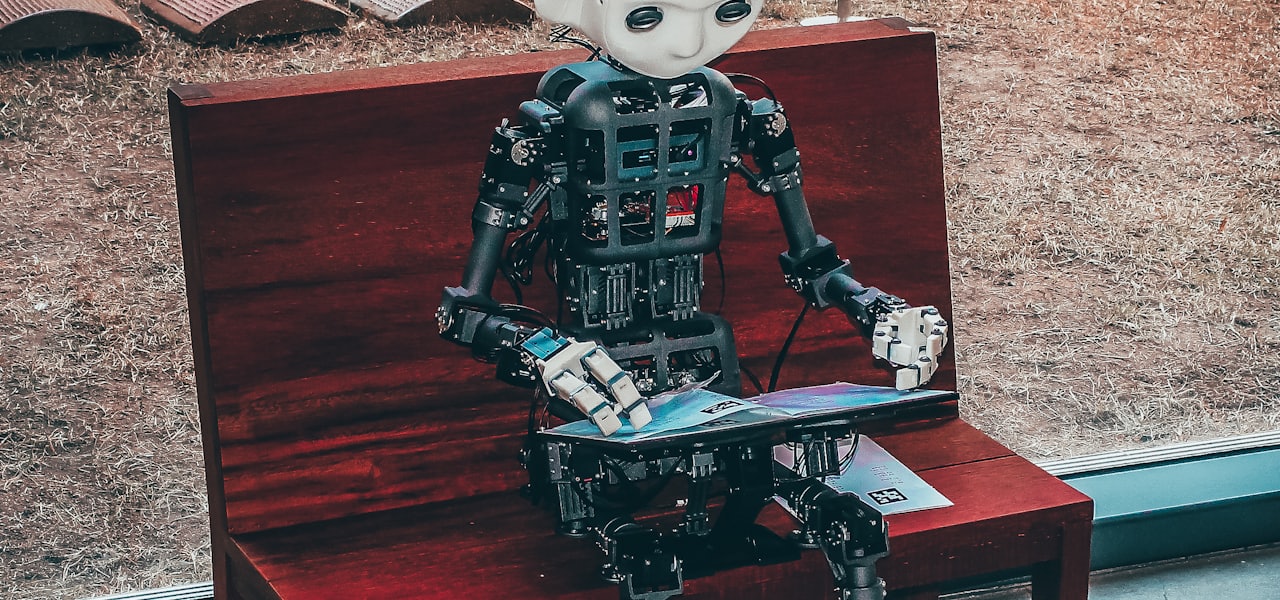
  • Anna Ridler

    Anna Ridler

    Anna Ridler (born 1985) is an artist who works with machine learning, handmade archives and moving image. She builds her own datasets to expose the labour and ideology embedded in the systems that organise knowledge. Her work is held in the permanent collections of the Whitney Museum of American Art, the Victoria and Albert Museum, M+ and ZKM Center for Art and Media Karlsruhe, and has been exhibited widely at cultural institutions including Tate Modern, Barbican Centre, Centre Pompidou, The Photographers' Gallery, Taipei Fine Arts Museum, MIT Museum, Kunsthaus Graz, ZKM Center for Art and Media Karlsruhe and Ars Electronica. == Biography == Born in London in 1985, Ridler spent her childhood raised between Atlanta, Georgia and the United Kingdom. She obtained a Bachelor of Arts in English Literature and Language from Oxford University in 2007 and a Master of Arts in Information Experience Design from the Royal College of Art in 2017. == Art practice == Ridler's practice uses technology, and in particular machine learning, to investigate how naming, classification and financial speculation determine what can be seen and what is erased. A core element of Ridler's work lies in the creation of handmade data sets through a laborious process of selecting and classifying images and text. By creating her own data sets, Ridler is able to uncover and expose underlying themes and concepts while also inverting the usual process of scraping pre-classified images found in large databases on the Internet. She began working with machine learning as an artistic material in 2017, at a moment when the technology required building every dataset by hand; that constraint became the foundation of the practice. Her interests are in drawing, machine learning, data collection, storytelling and technology. == Work == Some of Ridler's most notable works to date fall within her ‘tulip series’ which explores the hysteria around tulip mania and compares it to the speculation and bubbles surrounding cryptocurrencies. The series is expressed in three forms: a photographic dataset in Myriad (Tulips), 2018; two iterations of machine generated videos in Mosaic Virus (2018) and Mosaic Virus (2019); and a website with an accompanied functioning decentralized application in Bloemenveiling (2019). === Myriad (Tulips) (2018) === I wanted to draw together ideas around capitalism, value, and the tangible and intangible nature of speculation, and collapse from two very different yet surprisingly similar moments in history. Myriad (Tulips) (2018) is an installation of ten thousand hand-labeled photographs forming a dataset of unique tulips. The ten thousand, or myriad of, photographs were taken by Ridler over the course of three months, roughly the length of a tulip season, spent in Utrecht. Each photograph is carefully affixed one by one with magnets to a specially painted black wall in a laborious process to form a seemingly precise grid. Myriad (Tulips) (2018) has been exhibited in AI: More than Human, Barbican Centre, London, UK (May 16 - August 26, 2019); Error—The Art of Imperfection, Ars Electronica Export, Berlin, Germany (November 17, 2018 – March 3, 2019); Peer to Peer, Shanghai Centre of Photography, Shanghai, China (December 8 - February 9, 2020). The work was featured in Bloomberg, It’s Nice That, and Hyperallergic. For Myriad (Tulips), Ridler was nominated for a Beazley Design of the Year award for her presentation of an alternative perspective on how to engage with artificial intelligence; demonstrating a departure from ownership and control of major corporations to a more personalized process of constructing and conceptualizing from the ground-up. === Mosaic Virus (2018, 2019) === Mosaic Virus (2018) is a single screen video installation displaying a grid of continually evolving tulips in bloom. For Mosaic Virus (2019) Ridler used three screens. The appearance of the tulips is controlled by artificial intelligence using fluctuations in the price of bitcoin. The stripes on the tulips' petals reflect the value of the cryptocurrency. Ridler draws parallels with the tulip mania of the 17th century; representing the hysteria and speculation around crypto-currencies. The work takes its name from the mosaic virus which caused stripes in tulip petals, subsequently increasing their desirability and leading to speculative prices. Ridler trained a general adversarial network (GAN) on the set of ten thousand photographs of individual tulips from her work Myriad (Tulips). She used a technique called spectral normalization to improve the output. The work was exhibited in Error—The Art of Imperfection, Ars Electronica Export, Berlin, Germany (November 17, 2018 – March 3, 2019). === Bloemenveiling (2019) === Bloemenveiling (2019) is an auction of artificial-intelligence-generated tulips on the blockchain in the form of a functioning decentralized application: http://bloemenveiling.bid. Ridler collaborated with senior research scientist at DeepMind, David Pfau to investigate whether blockchain could be used as a means of finding poetic substance within it. The piece interrogates the way technology drives human desire and economic dynamics by creating artificial scarcity. In the work, short moving image pieces of tulips created by generative adversarial networks are sold at auction using smart contracts on the Ethereum network. Each time a tulip is sold, thousands of computers around the world all work to verify the transaction, checking each other's work against each other. While the artificial intelligence behind the moving image pieces has the potential to generate infinite flowers, the enormous distributed network is used, at great environmental cost, to introduce scarcity to an otherwise limitless resource. Bloemenveiling was exhibited in Entangled Realities, HEK Basel, Basel, Switzerland in 2019. == Solo exhibitions == Anna Ridler, Circadian Bloom, ZKM Center for Art and Media, Karlsruhe, (2023) Anna Ridler, Time Blooms, Buk Seoul Museum of Art, Seoul, (2025) Anna Ridler, Trace Remains, Galerie Nagel Draxler, Cologne, (2026) Anna Ridler, Laws of Ordered Form, The Photographers' Gallery, London (2020); The Abstraction of Nature, Aksioma, Ljubljana (2020) == Awards and recognition == European Union EMAP Fellow (2018) DARE Art Prize (2018–2019) Featured in Thames & Hudson, Digital Art (1960s–Now) Featured in British Art: The Last 15 Years ABS Digital Artist of the Year (2025)

    Read more →